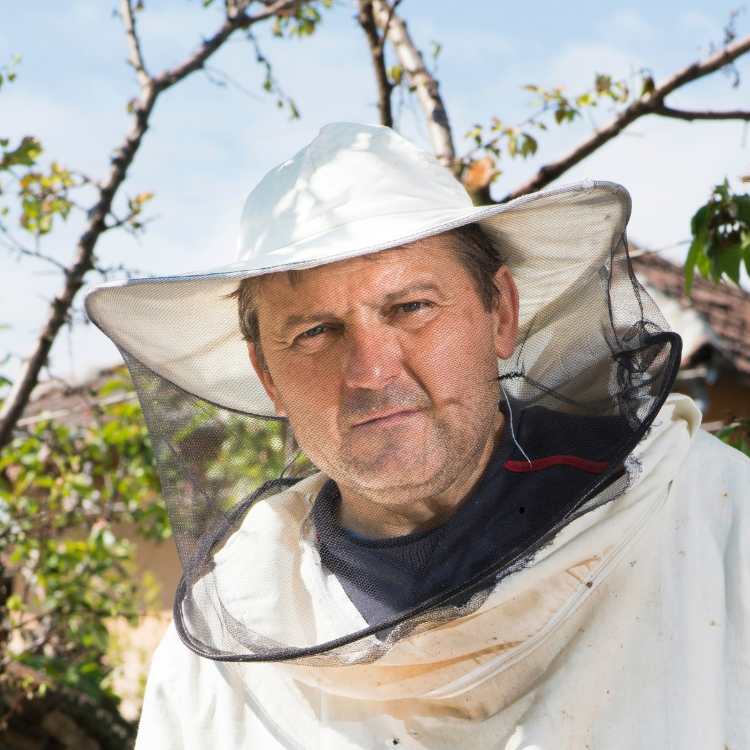

Ever since starting out as a beekeeper, every discovery to me has been a data point. Something that teaches me more about the fascinating world of bees. I have spent a lot of time looking closely at some of the most fascinating species. But one has been able to capture a whole lot of attention. That being the biggest bee in the world. Once thought lost, the rediscovery of the biggest bee from the Indonesian forests has again sparked interest in the community.
Wallace’s Giant Bee, or the Megachile pluto, is the gentle giant we are going to be focusing on. Here is everything you need to know about them.
Body
This species is built for resin construction. Thanks to a super large body, when fully mature, a female Megachile pluto can reach a size that honestly feels unreal. Sometimes even larger than a human thumb. She has wings that extend more than six centimeters, which make a ridiculous amount of vibration when flapping. These are so strong, you can easily feel their wings beat meters away.
The jaws make up most of the head. But these are not to hunt or bite. These are for one purpose alone. And that is manipulating resin. These might look scary up close, but there is no need to worry.
These jaws help the biggest bee to:
- Scrape dense resin deposits from specific forest trees
- Mold the resin into compact loads for transport
- Reinforce brood chambers inside nests
- Maintain strong defensive barriers that repel termite intrusion.
It is this jaw-driven resin behavior that sets the biggest bee apart from other smaller Megachile species that mainly rely on leaf fragments or softer materials, not tree resin.

Behavior
Wallace’s Giant Bee is a solitary superstar of the forest. No large colonies, no huge generations to feed and support. It works alone inside arboreal termite structures. Quite rare to see more than a few individuals sharing the nest.
As for the location, they prefer their nests high in trees or sealed behind hardened termite layers. This extreme level of protection can sometimes make field observations very hard to follow.
Habitat requirement of the biggest bee
Almost every expert you ask will agree on one thing: the biggest bees are quite vulnerable when it comes to choosing their habitat. These massive creatures are able to survive only under very narrow, favorable environmental conditions. I verified some field data I could find on the internet. Here is what I learned.
- Primary lowland forest with minimal disturbance
- Arboreal termite colonies for nest excavation
- Resin-producing trees for thick, workable material
- Stable humidity conditions preserved by intact canopy cover
Take away any of these factors, and things get devastating for the biggest bees. And you don’t need to go far to see the effects. Deforestation across Indonesia has already begun to restrict the natural range of the biggest bee.
Why it stayed hidden for decades
This species has been highly elusive. It is only in the last few years, information about the Wallace’s Giant Bee has been pouring out. Most didn’t know about them because their nests remains:
- Elevated high in mature trees.
- Hidden behind multiple layers of termite architecture.
- Shielded by dense foliage
- Occupied by only a few bees at a time.

Megachile Pluto on ground
The rediscovery
A species once thought lost
Alfred Russel Wallace became the first person to describe the species (also where the species got its name). This was way back in the 19th century. But as time rolled on, the scientific community lost track of it for long periods, thus forgotten. Occasional specimen sales did raise some alarm, but no one ever confirmed a living population.
It is only in the recent decades that researchers finally got to document it live again.
New research opportunities
The living specimen filmed in the wild gave researchers invaluable data and insights into this species, including:
- Flight acoustics
- Resin foraging cycles
- Chamber construction habits
- Interactions with termite colonies
Biggest conservation challenges for the biggest bees
Though these can be massive and sometimes intimidating when buzzing in front, it is these large, gentle giants that are in dire need of our protection.
Three core threats
A quick search on the internet spews out three core, immediate threats to the biggest bees of the world:
- Habitat loss from agricultural expansion
- Declines in resin-producing trees that reduce building material
- Unregulated specimen trade (this removes reproductive females from the wild)
When you combine all these factors, the effects are visible and devastating. And with this species being so in tune with its surroundings, they are not able to adapt quickly enough to any sudden change in the environment.
How to protect them
Saving the biggest bee will need parallel action across:
- Forest preservation: Maintaining continuous lowland forest
- Tree protection: Safeguarding resin-source species
- Termite habitat conservation: Protecting arboreal termite colonies that serve as nest sites

Wallace's giant bee
My final thoughts from the field
I study bees, how they make honey, how they balance ecosystems, and how they protect our food chains even at the smallest and most intricate levels. The biggest bees remind us that even the largest pollinators can be delicate. Its survival depends on our conservation efforts. If done right, the biggest bee will remain active in the canopies of Indonesia, thriving.
For more such fun stories, consider following my full blog here.