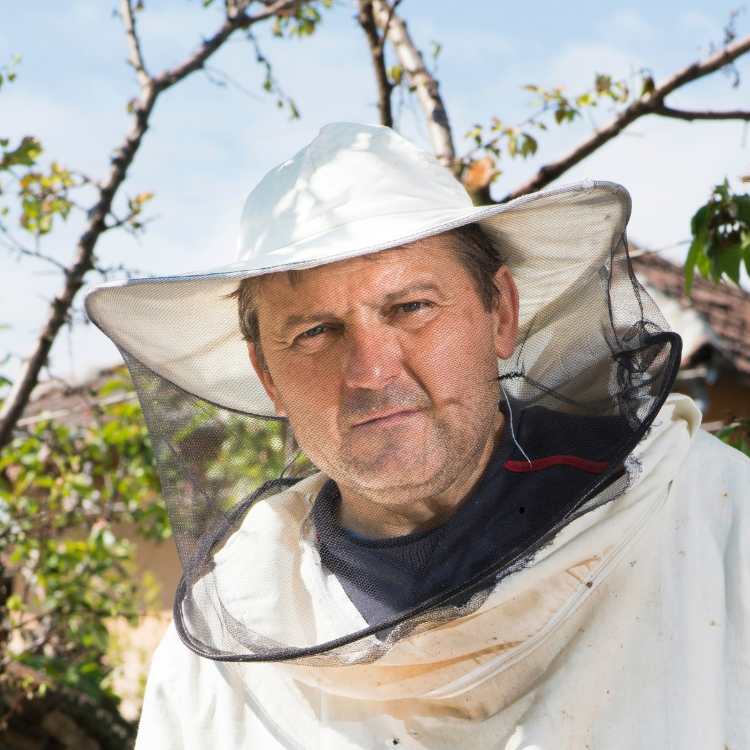

Did you think that all bees are yellow and black? Well, think again. Over dozens of years in the world of apiculture, few sights captivate me more than the shimmer of blue bees under the warm summer sun. These rare pollinators are indeed a marvel of evolution. With their metallic blue hues, these creatures really challenge what we know about bee biology, behavior, and survival.
How are some bees blue?
The vibrant colors of blue bees is not a pigment. The color comes straight from their exoskeleton. It is able to scatter light in a particular way that reflects blue wavelengths. So under the sun, you see a striking metallic appearance.
This microscopic structure also acts as a layer of protection, reducing water loss in hot environments. And for bees that live in tropical or subtropical climates, such adaptation is critical to survive.
Unlike the common honeybee, whose coloring serves to warn predators, the hue of the blue bees help them rely on camouflage among blossoms of similar hues. Evolution has shaped their color as a survival mechanism that blends into the petals they pollinate.

Key species of blue bees
Across continents, several distinct species fall under the “blue bee” category. Let’s take a look at some of the most prominent ones.
- Osmia calaminthae (Blue Calamintha Bee): A Florida native, this solitary bee depends almost entirely on the Ashe’s calamint flower. It collects pollen with specialized facial hairs, rubbing its head side to side in a motion unseen in other bees.
- Xylocopa caerulea (Blue Carpenter Bee): This species, which is quite common in Southeast Asia and India, is one of the bigger species growing to nearly 23 mm. Females have a thorax that is a deep cobalt color, while the males have a more greenish brown look.
- Osmia lignaria (Blue Orchard Bees): This species of bees are often used in agriculture. These are very effective at pollinating fruit trees, and they are frequently more efficient pollinators than honeybees in apple and almond orchards.
Nesting behavior and ecology
The nesting behavior is quite fascinating. Their independence comes with an ingenious approach to reproduction and resource use.
- They burrow into wood, soil, or hollow reeds to create chambers for their brood.
- Inside each cell, they mix pollen and nectar to create bee bread, which is used to feed the larvae.
- After laying an egg on top, the female will seal the chamber with clay or wood particles before moving to the next.
- The brood develops in complete isolation to eventually emerge as a new generation of adults the following spring.

Top view of the Xylocopa caerulea
Why are blue bees important?
Blue bees have a critical ecological role. They are not just beautiful. Useful, too. They are crucial native pollinators where traditional honeybees struggle. Hive bees depend on colonies for warmth and survival. But, in comparison, solitary bees like these blue bees are much more resilient to some diseases and parasites.
Here’s why their conservation matters:
- Effective pollinators: Research indicates that blue bees transfer more pollen during single visits than any other pollinator. Thus, making them extraordinarily valuable for pollination in almond, apple, and peach crops.
- Biodiversity indicators: Their presence indicates a healthy native ecosystem. In fact, a reduction in blue bee populations often corresponds to a decline in other environmental health factors.
- Habitat specialists: For many species, specialist host plants are required. And, if those host plants disappear, blue bees will almost certainly also disappear.
Conservation challenges
Despite their high resilience, mounting threats are not sparing these blue superstars. Habitat loss, pesticide exposure, and monoculture farming have reduced their natural nesting and feeding grounds. In Florida, for example, the blue calamintha bee now occupies one of the fastest-disappearing ecosystems in the country.
Efforts to conserve them include:
- Restoring native vegetation, including host species, among them Ashe’s calamint.
- Reducing pesticide application in pollinator zones.
- Providing artificial nesting sites, such as bee blocks or drilled wooden holes, to imitate their natural habitat.
These efforts can be small, but they are critical to the development of microhabitats that support populations during critical reproduction periods.

Orchard mason bee
What we need to learn
Even for those of us who keep traditional hives, the study of blue bees reveals a wealth of information about their world. We learn from their efficiency that farmers must consider diversity among pollinators to achieve stability in agriculture. Inviting native bee populations to coexist with honeybee colonies enhances the resilience of population interactions in entire systems.
For the gardener, promoting blue bees can be a straightforward venture by planting native flowering species and by maintaining a pestilence-free area. Additionally, bee hotels or tubes made of bamboo can create nesting areas for these solitary pollinators who are willing to quickly colonize them.
My final thoughts on these amazing blue bees
I have always said that bees are the engineers of balance in nature. These blue bees remind us that beauty and function coexist perfectly in evolution. And the shimmer, that’s not just aesthetic. It plays a critical role to their adaptation and survival. Each time I catch that metallic glint on a flower, I am reminded that even the rarest pollinators have a place in our ecosystem’s grand design.
For more such fun insights and trivia from their amazing world, consider following my full blog here.