
Yes, honeybees die after they sting. But it is only honeybees that have this nature. And honeybees make up less than 0.05% of the bee species. The rest? Most will not perish after they sting. So, since honeybees are the most well-known, the misconception of bees dying after stinging has been passed down through generations.
So, let’s answer the question for you and break down what really happens and why honeybees are the exception, not the rule.
Why do honeybees die after stinging?
When people ask, do bees die after they sting? They usually think of the European honeybee (Apis mellifera). This species is responsible for most human stings, and yes, these bees die shortly afterward. The reason is purely mechanical.
The honeybee’s stinger has backward-facing barbs, shaped like tiny hooks, designed to anchor deeply into thick mammalian skin. As the bee stings, the barbs lock in place. When the bee tries to fly away, her lower abdomen tears apart, pulling out part of her digestive system, muscles, and venom sac. The wound is fatal within minutes.
The process might seem brutal at first but this makes sense if you look at it very closely. The stinger continues to pump venom into the skin for several seconds even after the bee has flown off. The venom is a cocktail of alarm pheromones that smell faintly like bananas. This is an instant alert for other bees to defend the hive.

Most bees live to sting again
What about other types of bees? Do bees die after they sting in most cases? Absolutely not. As a matter of fact, most species of bees can sting multiple times and live to tell about it. Of the 21,000 or more known species of bees around the world, only 8 of them will die after stinging you. The rest have smooth stingers that have no barbs, therefore they can sting and withdraw and fly away unharmed.
Key facts about non-lethal bee stings:- Smooth stingers: For most bees, such as bumblebees and carpenter bees, their stingers are smooth and do not separate from their bodies.
- Can sting multiple times: These bees have the ability to sting multiple times without lethal injury.
- Only defend themselves: Bees will sting only if they are provoked or defending their nest and there is no advantage in stinging prior to attacking.
- Females only: Only female bees can sting as stingers are derived from the ovipositor, or egg-laying organ.
The anatomy of a stinger
If you want to learn more about why do bees die after they sting, it helps to know what a stinger actually is. In all bees, wasps, and ants, the stinger is a specialized egg-laying organ called an ovipositor. Consider the millions of years that evolved it into a defensive weapon capable of injecting venom.
Here’s what happens when a honeybee stings
- The stinger acts like a tiny syringe with two saw-toothed blades called lancets.
- These lancets move alternatively, embedding the stinger deeper into the skin.
- The attached venom sac keeps pumping toxins even after the bee flies away.
- The barbed structure prevents withdrawal, leading to the bee’s death as its abdomen ruptures.

Why do honeybees only die after stinging?
The issue of whether or not bees die after stinging frequently arises because honeybees are the most recognizable species in relation to humans. Honeybees live in colonies consisting of 10,000-60,000 individuals and will display coordinated aggression when their colony is threatened. Conversely, the majority of our native or solitary bees are not aggressive, seek shelter in soil or wood cavities, and do not sting.
Here is why they die after stinging:
- Their stingers are evolved for defending colonies from mammals, not insects.
- Mammalian skin is thick and elastic, trapping the barbed stinger.
- Against other insects, honeybees can usually pull the stinger out and survive.
- Worker bees act as sacrificial defenders. This ensures the queen and brood remain safe.
When you look at it from the perspective of the hive, it is a small price to pay. Worker bees act as disposable guardians. Their sacrifice ensures the queen continues laying eggs and the colony thrives.
Most common stingless bees
Among the 537 known species of stingless bees worldwide, many thrive in tropical regions such as northern Australia. These bees belong to the Meliponini species that don’t sting at all. Their primary defensive mechanism is to swarm intruders, biting or covering them in sticky resin. Their honey production is much lower than that of honeybees, but the flavor is more tangy and prized for its medical qualities.
You also have members from the Stenotritidae family. These are a group of large, gentle native bees that completely lack functional stingers. Their size might look intimidating, but they pose no threat. Their only mission is pollination.

Meliponula ferruginea
My final thoughts
So, do bees die after they sting? Only the most beloved honeybees. Out of the tens of thousands of bee species, just the honeybee and a handful of its close relatives perish after stinging. Most others live on, pollinating crops, supporting ecosystems, and reminding us that fear of bees is often misplaced.
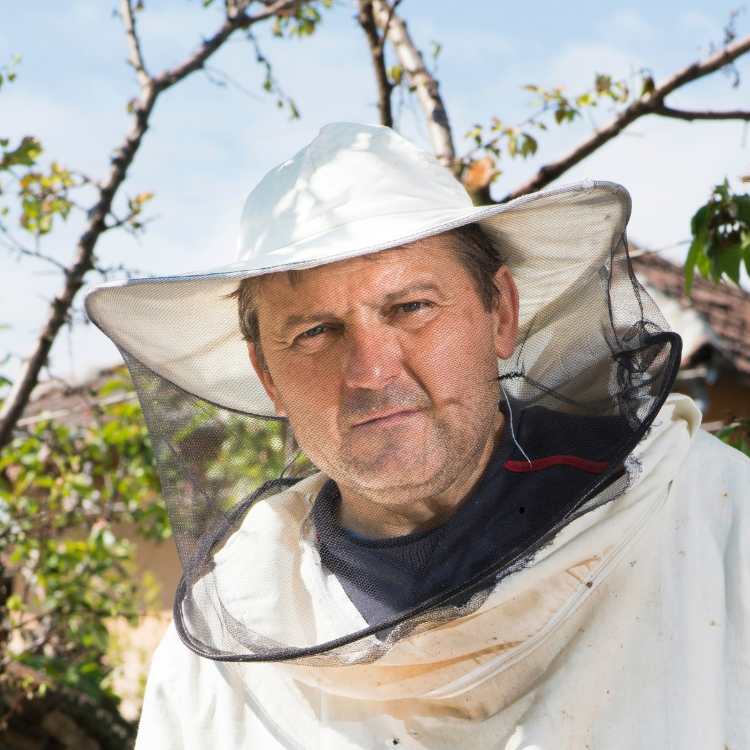
As I beekeeper, I know that honeybees sting only as a last resort. They are not out there to pick up a fight. Honeybees die defending their community, not out of malice but instinct.
For more such fun stories and trivia from the amazing world of bees, consider following my full blog here.